Learn a Trade in 2027: The 20 Most In-Demand Skilled Trades in Egypt (Pay, Training Time and Free Courses)
Last updated: November 2026 · By the BusineSooq team
Before writing this guide we analysed 5,704 job ads published on BusineSooq during 2026. One number sums up the picture: the median advertised salary is EGP 9,000 a month, and only one ad in eight reaches EGP 12,000. In the same month, the Ministry of Labour's November 2026 jobs bulletin offered senior technicians EGP 12,000 to 15,000. The gap between those two figures has a name: a trade. This guide covers 20 in-demand skilled trades in Egypt, how long each takes to learn, where to train for free, and the paperwork you need to work in Egypt or abroad.
The 30-second summary
- Half of advertised jobs pay between EGP 7,500 and 10,000 a month, and about half of all ads mention a 12-hour shift.
- In the Ministry of Labour bulletin (November 2026), a technician is offered EGP 9,000 and a senior technician EGP 12,000 to 15,000.
- The fastest trades to learn are CCTV installation, painting, gypsum board and tailoring: two to six months to your first paid job.
- Free training exists: the Ministry of Labour's 2026–2027 plan includes 540 courses.
- The new Labour Law requires a licence to practise and a skill-level certificate for trades named by ministerial decision, with fees capped at EGP 500 each.
In this guide
- The numbers first: what jobs pay, and what a trade pays
- Comparison table: 20 in-demand trades
- Home and finishing trades
- Repair and appliance trades
- Automotive trades
- Hands-on trades for men and women
- Choose your trade in one minute
- Where to train for free
- A 90-day plan to your first customer
- Licence and skill-level certificate
- Working in the Gulf and the Saudi verification test
- How to get customers
- 6 mistakes that keep tradespeople stuck
- Frequently asked questions
The numbers first: what do jobs that need no trade actually pay?
We collected every job ad published on BusineSooq from January to 23 November 2026: 5,704 ads from 437 advertisers, of which 3,618 stated a clear monthly salary in Egyptian pounds. Here is what they show:
| Job type | Ads with a stated salary | Median salary | Half of ads fall between |
|---|---|---|---|
| All jobs | 3,618 | EGP 9,000 | 7,500 – 10,000 |
| Factories and production | 1,762 | EGP 10,000 | 9,000 – 11,000 |
| Warehouses and packing | 151 | EGP 9,850 | 8,700 – 11,750 |
| Drivers and delivery | 99 | EGP 8,500 | 6,750 – 8,750 |
| Security guards | 861 | EGP 8,000 | 7,400 – 8,900 |
| Call center and customer service | 329 | EGP 7,250 | 7,250 – 7,500 |
- Among ads with a stated salary, only one in eight (12%) reaches EGP 12,000 or more.
- For about a third of those ads, the top salary is below EGP 8,500, which is the new private-sector minimum wage that applies from January 2027 salaries.
- About half of all ads mention a 12-hour shift.
How we calculated this: we used the salary written in each ad, taking the midpoint when a range was given, and left out ads with no clear monthly salary. The median is the figure with half of the ads above it and half below. These are advertised salaries, not salaries actually paid. Some ads are repeats, 92% were published since August 2026, and most are in Greater Cairo and the industrial cities.
And what does a trade pay?
The jobs bulletin announced by the Ministry of Labour in November 2026 lists technicians and security guards together, at the same company, which makes for a direct comparison:
| Job in the bulletin | Monthly salary |
|---|---|
| Security guard and security supervisor | EGP 7,000 – 9,500 |
| AC technician | EGP 9,000 |
| Electrical technician | EGP 9,000 |
| Carpentry technician | EGP 9,000 |
| Senior plumbing technician | EGP 12,000 |
| Senior electrical technician (medium voltage) | EGP 13,000 |
| Senior mechanical technician (pumps and generators) | EGP 14,000 |
| Senior AC technician | EGP 15,000 |
An honest reading of the numbers: a trade does not double your pay on day one. A junior technician starts close to a production worker's salary. What a trade does is raise the ceiling: a senior technician earns EGP 12,000 to 15,000, against EGP 7,000 to 9,500 for a security guard in the same bulletin. It also opens two doors an ordinary job does not: working for yourself, and working abroad.
For a self-employed tradesperson there is no reliable published income figure, because they are paid per job, not per month. Their income is the number of jobs multiplied by their price. That is why a full section of this guide is about getting customers.
Comparison table: 20 in-demand skilled trades for 2027
Training times are estimates for someone who trains regularly with a master tradesperson or at a training centre, and they describe the time to reach simple paid work, not mastery. Tool cost is a comparison between trades, not a fixed amount.
| Trade | Time to first paid job | Tool cost | Type of demand |
|---|---|---|---|
| 1. Home electrician | 6 to 12 months | Medium | Daily and emergency |
| 2. Plumber | 4 to 8 months | Medium | Daily and emergency |
| 3. Painter | 3 to 6 months | Low | Finishing and renovation |
| 4. Tiler (ceramic and marble) | 4 to 8 months | Medium | Finishing |
| 5. Gypsum board and decor technician | 3 to 6 months | Medium | Finishing |
| 6. Carpenter (furniture and kitchens) | A year or more | High | Custom work and repairs |
| 7. Aluminium technician | 4 to 8 months | High | Finishing and renovation |
| 8. Blacksmith and welder | 3 to 6 months | Medium | Workshops, factories, projects |
| 9. AC and refrigeration technician | 6 to 12 months | High | Seasonal, peaks in summer |
| 10. Home appliance repair technician | 8 to 12 months | Medium | Daily |
| 11. CCTV and network installer | 2 to 4 months | Low | Shops, companies, homes |
| 12. Mobile phone repair technician | 4 to 8 months | Medium | Daily |
| 13. Solar energy technician | 3 to 6 months after electrical basics | Medium | Projects (growing) |
| 14. Car mechanic | 1 to 2 years | High | Daily |
| 15. Auto electrician | A year or more | Medium | Daily |
| 16. Car body repair and painting | A year or more | High | Daily |
| 17. Tailoring and sewing | 3 to 6 months | Medium | Daily and seasonal |
| 18. Barber and hairdresser | 4 to 8 months | Low to medium | Daily |
| 19. Pastry and home cooking | 2 to 4 months | Low | Occasions and daily |
| 20. Upholstery and curtains | 6 to 12 months | Medium | Renovation and custom work |
Part 1: Home and finishing trades (8 trades)
1. Home electrician
Installing and maintaining wiring, distribution boards, switches and lighting. Demand never stops, because an electrical fault cannot wait.
- What makes a professional: safety before speed. Breakers sized for the load, the right cable sizes, and power off before any work.
- Start with: assisting an electrician on a finishing site. That is where you see an installation from the first conduit to the last switch.
- On BusineSooq: see how electricians present their services.
2. Plumber
Installing supply and drainage pipes, fitting sanitary ware and water heaters, and fixing leaks and blockages.
- What makes a professional: pressure-testing before the walls are closed, and correct drainage slopes. A plumbing mistake shows up months later and costs you your reputation.
- Start with: small repair jobs such as mixers, flush tanks and unblocking. They are plentiful and they teach you to diagnose.
- On BusineSooq: plumber listings.
3. Painter
Preparing walls with putty and sanding, then painting, wallpaper and decorative finishes.
- What makes a professional: preparation is most of the result. A painter who masters putty and a flat wall gets asked for by name.
- Start with: one room in your own home or a relative's, from scraping to the final coat, with before and after photos.
- On BusineSooq: painter listings.
4. Tiler (ceramic and marble)
Laying ceramic, porcelain and marble on floors and walls.
- What makes a professional: levels, a layout that hides the cuts, and clean cutting. Learn large-format porcelain: it takes more skill and pays more.
- Start with: working as a helper to a tiler. You will learn the mix and the levels before you ever hold a tile.
- On BusineSooq: tiler listings.
5. Gypsum board and decor technician
Suspended ceilings, light coves, partitions and wall units.
- What makes a professional: accurate measurements, a level ceiling, and agreeing the lighting positions with the electrician before closing up.
- Start with: fixing the metal frame. Everything else rests on it.
- On BusineSooq: decor and gypsum listings.
6. Carpenter (furniture and kitchens)
Making, fitting and repairing kitchens, wardrobes and doors. It takes long to learn, but it lasts a lifetime and the workshop is a business in itself.
- What makes a professional: precise measuring. A carpenter who draws the kitchen for the customer before building it sells more.
- Start with: assembly, and fixing hinges and drawers. It is small work that is needed every day.
- On BusineSooq: carpenter listings.
7. Aluminium technician
Windows, doors, kitchens and facades made from aluminium profiles.
- What makes a professional: exact measurements and a tight seal against water and dust.
- Start with: on-site installation with a workshop, then cutting and assembly inside it.
- On BusineSooq: aluminium technician listings.
8. Blacksmith and welder
Security doors and window grilles, metal structures and steel frames. Welding is also a skill that factories and contractors hire for.
- What makes a professional: clean, strong welds and strict use of protective gear: mask, gloves and safety shoes.
- Start with: arc welding on scrap pieces until your hand is steady.
- On BusineSooq: blacksmith listings.
Part 2: Repair and appliance trades (5 trades)
9. AC and refrigeration technician
Installing, servicing, cleaning and recharging air conditioners and refrigerators. It is the best-paid technician role in the Ministry of Labour bulletin above. The work is seasonal and peaks in summer, so technicians save for winter or add water-heater servicing.
- What makes a professional: mastering inverter units and electronic boards, and finding the leak before recharging the gas.
- Start with: working as an installation helper before the summer season.
- On BusineSooq: AC technician listings.
10. Home appliance repair technician
Washing machines, refrigerators, water heaters and cookers.
- What makes a professional: the right diagnosis before replacing any part. A customer may forgive the price, but not the replacement of a part that was fine.
- Start with: one type of appliance, such as washing machines, until you master it. Then expand.
- On BusineSooq: appliance repair listings.
11. CCTV and network installer
Installing cameras and recorders and linking them to a phone, plus intercoms and internal networks. It is one of the fastest trades to learn if you understand basic electrics.
- What makes a professional: camera placement with no blind spots, tidy cabling, and walking the customer through the app before you leave.
- Start with: a four-camera system in your own home or a nearby shop.
- On BusineSooq: CCTV installer listings.
12. Mobile phone repair technician
Software fixes, and replacing screens, batteries and charging ports.
- What makes a professional: fine soldering under a microscope. It is what separates an ordinary technician from one in demand.
- Start with: the most common faults: screen, battery and charging port.
13. Solar energy technician
Installing panels, inverters and solar water heaters. It is a natural extension for anyone who knows electrics, and demand grows as electricity prices rise.
- What makes a professional: load calculation, and earthing and protecting the system.
- Start with: electrical basics first, then training with an installation company.
Part 3: Automotive trades (3 trades)
14. Car mechanic
Servicing engines, suspension, brakes and transmissions. It takes long to learn, but a successful workshop is a complete business, which we cover in How to Start a Successful Car Workshop Business.
- What makes a professional: diagnosing with scan tools instead of guessing, and specialising in particular makes.
- Start with: an apprenticeship with a well-known mechanic in your area.
- On BusineSooq: car mechanic listings.
15. Auto electrician
Wiring harnesses, sensors, starters, alternators and on-board computer systems.
- What makes a professional: reading fault codes and understanding circuits. Every new model increases the need for you.
- Start with: a basic diagnostic scanner, and learn to read its codes.
- On BusineSooq: car electrician listings.
16. Car body repair and painting
Repairing and pulling dents, then filler, paint and polishing.
- What makes a professional: matching the colour and hiding every trace of the repair.
- Start with: preparation and sanding alongside an experienced painter.
Part 4: Hands-on trades for men and women (4 trades)
17. Tailoring and sewing
Making and altering clothes and home textiles. You can start at home with one machine, or in a workshop.
- What makes a professional: taking measurements and drafting patterns. Alterations such as shortening and taking in are steady daily income.
- Start with: simple alterations for neighbours, then a complete garment.
18. Barber and hairdresser
Cutting, styling and care, for men or for women.
- What makes a professional: hygiene, sterilised tools and keeping up with new styles. A satisfied customer comes back every month.
- Start with: training in an established salon before thinking about your own shop.
19. Pastry and home cooking
Desserts, cakes, pastries and home-cooked meals to order.
- What makes a professional: consistent taste, good packaging and delivering on time.
- Start with: only three items you make really well, sold to people you know first.
20. Upholstery and curtains
Upholstering and restoring sofas and chairs, and making and fitting curtains.
- What makes a professional: fabric stretched without a wrinkle, and neat finishing.
- Start with: restoring one old chair from start to finish.
Choose your trade in one minute
| Your situation | Best fit | Why |
|---|---|---|
| You need income soon | CCTV, painting, gypsum board, pastry | Shortest training and fewest tools |
| You enjoy diagnosing faults | Electrics, AC, appliances, mobile phones | More head work than heavy lifting |
| You are thinking of the Gulf | Electrics, plumbing, welding, AC, carpentry, mechanics | Technical trades covered by the Saudi verification test |
| You cannot afford tools | Painting, CCTV, barbering | You can start with very little |
| You want to work from home | Tailoring, pastry and cooking, hairdressing | No shop needed at the start |
| You hold a technical diploma | Your own specialty | You are exempt from the skill certificate if you work in your specialty |
| You dream of your own workshop | Carpentry, aluminium, metalwork, mechanics | Trades that grow into a business |
Where to learn: 4 routes, from free to paid
1. Ministry of Labour centres and mobile units (free)
The Ministry of Labour has approved its vocational training plan for fiscal year 2026–2027. It includes 540 free training courses to qualify 8,899 young people across the governorates. The ministry also runs 38 mobile training units that move between governorates under the "Your Trade, Your Future" (Mehnatak Mostaqbalak) and "Decent Life" (Haya Karima) initiatives.
- A real example: the free plumbing course announced in Sohag ran for 15 days, for ages 18 to 45, for people who can read and write, and ended with a certificate.
- How to register: courses are announced on the official pages of the ministry and the labour directorates. Go to the labour office for your area and ask about the nearest course in the trade you want.
- Set the right expectation: a two-week course gives you the basics and the certificate, not the experience. Experience comes from the second route.
2. Apprenticeship with a master tradesperson (the oldest and fastest route)
Choose someone whose work is clean and whose reputation is good, and agree on a period and a daily wage, even a small one. Write down what you learn every day, and ask "why", not only "how".
3. Technical schools, institutes and grants
From time to time the Ministry of Labour announces free training grants in cooperation with technical institutes, such as those announced in 2026 with the Salesian (Don Bosco) institute. Follow the ministry's announcements, because places are limited.
4. YouTube and courses (a supplement, not a substitute)
A video explains the idea, but your hands only learn by doing. Be careful with courses that sell an "internationally accredited certificate" with no real practical training.
A 90-day plan: from zero to your first customer
| Period | What you do |
|---|---|
| Weeks 1 and 2 | Pick one trade, visit three workshops or job sites to watch the work, and ask the labour office about the nearest free course. |
| Weeks 3 to 8 | Train daily with a master tradesperson or at a centre. Buy only the basic tools, and photograph every job before and after. |
| Weeks 9 and 10 | Do small jobs for family and neighbours at the cost of materials, and ask each one for a written review and a photo. |
| Weeks 11 and 12 | Add your service on BusineSooq with photos of your work and your area, and start the skill-level certificate process. |
| From month four | Take small jobs on your own, and stay with your master on the bigger jobs until you master them. |
Licence and skill-level certificate: what changed in the Labour Law?
Labour Law No. 14 of 2025 regulates the practice of trades in Article 27. The key points:
- Licence: anyone who wants to practise one of the trades named by a decision of the Minister of Labour applies to the competent administrative authority for a licence to practise.
- Skill certificate: the application includes a certificate stating the applicant's skill level, issued after a theory and practical test.
- Fees: no more than EGP 500 for the licence, and no more than EGP 500 for the skill test.
- Exemption: graduates of technical education, institutes and universities are exempt from the skill certificate when they work in their specialty.
- Transition period: employers have up to three years from the issue of the implementing decisions to employ their workers without the licence condition. A worker who had spent more than a year with the same employer before the law was issued is exempt from the licence.
- Where to apply: the employment offices of the labour directorate in your governorate receive skill-level test applications.
Even if no customer ever asks for them, these papers are official proof of your skill for companies and for travel.
This is general information, not legal advice. Implementing decisions can change, so check with your labour office before you apply.
Working in the Gulf: the Saudi Professional Verification test in brief
A solid trade is a second passport. A report published in May 2026 gives these monthly salaries for Egyptian tradespeople in the Gulf:
| Trade | Monthly salary in the Gulf |
|---|---|
| Carpenter | SAR 1,400 – 2,800 |
| Plumber | SAR 1,500 – 3,000 |
| Electrician | SAR 1,800 – 3,500 |
- What is Professional Verification? A programme of the Saudi Ministry of Human Resources and Social Development that checks the skill of expatriate workers in technical and craft occupations before they travel, through a theory or practical test at accredited centres.
- Examples of occupations covered, according to published guides: building electrician, plumber, welder, carpenter, car mechanic, AC mechanic and tailor.
- Registration: on the official Professional Verification platform. The test is booked in your own name with your passport.
- Fees: paid in US dollars on the platform. Published guides quote figures between USD 50 and 85, so rely on the amount the platform shows you when you book.
Warning: do not pay a broker for a "ready certificate" or a "guaranteed contract". Deal only with recruitment companies licensed by the Ministry of Labour, and do not hand over your passport or money before you have seen a written contract.
From your first customer to your own workshop: how to get work
- Make yourself findable. Customers search online for "plumber near me" before they ask a neighbour. Add your service for free on BusineSooq with your area and phone number, and first look at how tradespeople and service providers present their listings.
- Photograph your work before and after. Ten real photos persuade better than a thousand words.
- Ask for a review after every job. Your first 10 reviews are your real capital.
- Price clearly. State your inspection fee and what the price includes before you start. The details are in How to Price Your Services Professionally.
- Be on time. Customers forget the price. They do not forget who failed to show up.
- Give a written guarantee, even a simple one. It sets you apart from the rest.
- Specialise. An "inverter AC technician" gets more calls than someone who does a bit of everything. Read Secrets of Highly Demanded Technicians.
Once your work is steady, these guides take you to the next step: How to Attract Clients in 7 Days, How to Double Your Income from Your Profession, and Independent Technician vs. Service Company.
6 mistakes that keep tradespeople stuck
- Rushing: taking on work above your level before you have mastered it burns your name in your area.
- Cheap tools: they spoil the work and break halfway through. Buy few, and buy good.
- Ignoring safety: a mask, goggles, gloves and safety shoes are not a luxury. One injury stops your income for months.
- Random pricing: a very low price brings a customer who never returns, and a price with no breakdown brings a dispute.
- No record of your work: a job with no photos and no reviews might as well not have happened.
- Stopping learning: appliances and materials change every year. See also Top Mistakes Service Providers Make.
Frequently asked questions about learning a trade
What is the best trade to learn in 2027?
There is no single best trade for everyone. If you need income soon, start with CCTV installation, painting or gypsum board. If you want higher income in the long run, choose AC, electrics or plumbing. These are the same trades for which the Ministry of Labour's November 2026 bulletin offers senior technicians EGP 12,000 to 15,000.
What is the easiest and fastest trade to learn?
The fastest is usually CCTV installation (two to four months), followed by painting, gypsum board, pastry and tailoring (two to six months) to reach your first paid job. Fastest does not mean best paid, though. Trades that take a year or more, such as carpentry and mechanics, are harder to enter and harder for competitors too.
How much does a tradesperson earn in Egypt?
In the Ministry of Labour's November 2026 jobs bulletin, a technician in AC, electrics or carpentry is offered EGP 9,000 a month, and a senior technician EGP 12,000 to 15,000. For the self-employed there is no reliable published figure, because income depends on the number of jobs and the price, and it can be much higher or lower than these numbers.
Can I learn a trade after 30 or 40?
Yes. The Ministry of Labour's own free courses accept these ages. The plumbing course announced in Sohag under the "Your Trade, Your Future" initiative was open to people aged 18 to 45. Choose a trade whose physical effort suits you, such as appliance repair, CCTV or tailoring.
Where can I find free vocational training in Egypt?
At the vocational training centres and mobile units of the Ministry of Labour. The ministry's 2026–2027 plan includes 540 free courses to train 8,899 young people, and dates are announced on the official pages of the ministry and the labour directorates in each governorate. Ask the labour office for your area about the nearest course.
What is the skill-level certificate, and is it mandatory?
It is a certificate that proves your level in your trade after a theory and practical test. Labour Law No. 14 of 2025 requires it, together with a licence to practise, for trades named by a decision of the Minister of Labour, with fees capped at EGP 500 for each. Graduates of technical education, institutes and universities are exempt when they work in their specialty.
Which trades are in demand in Saudi Arabia and the Gulf?
Technical trades such as electrics, plumbing, welding, carpentry, car mechanics and air conditioning. Many of them fall under Saudi Arabia's Professional Verification programme, a skills test taken before travel procedures are completed. Published salaries for Egyptian tradespeople in the Gulf range from SAR 1,400 to 3,500 a month, depending on trade and experience.
What are the best trades for women?
Tailoring, hairdressing and beauty, and pastry and home cooking, all of which can start from home. No trade is off limits, though. Women also work in CCTV installation, mobile phone repair, painting and decor.
Is a trade better than a job?
A job gives you a fixed salary from the first month. A trade gives you a higher ceiling after a period of learning. In our analysis of 3,618 job ads with a stated salary, the median was EGP 9,000, and only 12% of ads reached EGP 12,000. The smart move is to combine them: a job that pays your bills, and a trade you learn after hours.
How do I get my first customer?
Start with your own circle. Do small jobs for family and neighbours and photograph them before and after. Then add your service for free on BusineSooq with photos, your area and your phone number, and ask every customer for a review. Your first 10 reviews are your real capital.
Start now: your next step
Pick one trade from the table, and this week ask about the nearest free course or the nearest master tradesperson you can learn from. And if you already have a trade, do not wait for customers to knock on your door:
Add your service for free on BusineSooq
Read next:
- Online Jobs From Home in 2027: 25 Legit Ways to Earn
- Why Every Service Provider Should Join BusineSooq
- Top 10 Highest Paying Jobs in the Arab World
- Factory and production jobs open now
Sources
- BusineSooq data: analysis of 5,704 job ads published from January to 23 November 2026.
- Ministry of Labour bulletin: 651 jobs (Youm7, 20 November 2026, in Arabic)
- Private-sector minimum wage raised to EGP 8,500 (Sky News Arabia, in Arabic)
- Vocational training plan 2026–2027: 540 free courses (4 November 2026, in Arabic)
- Mobile vocational training units (Youm7, 30 April 2026, in Arabic)
- Free plumbing course in Sohag under "Your Trade, Your Future" (Youm7, in Arabic)
- Licensing of trades under Labour Law No. 14 of 2025 (Masrawy, 23 November 2026, in Arabic)
- Egyptian Ministry of Labour: vocational training services (in Arabic)
- Salaries of Egyptian tradespeople in the Gulf, 2026 (in Arabic)
- Official Saudi Professional Verification platform
Is this blog helpful?
0
0
Related Articles
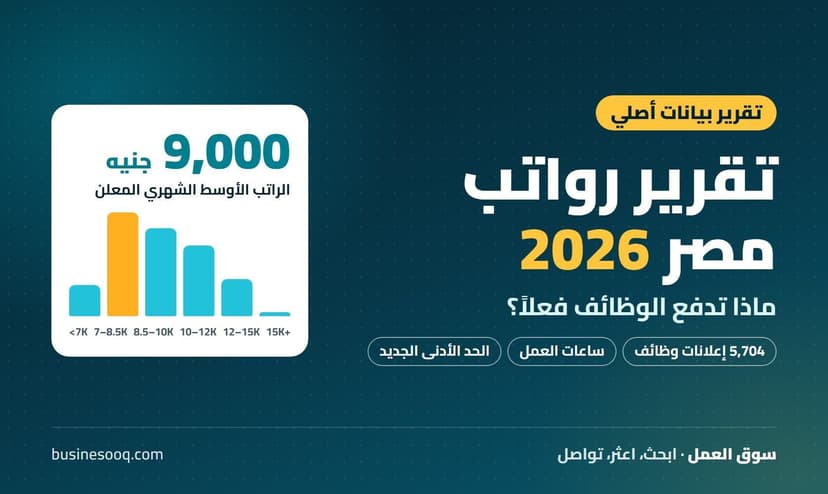
Egypt Salary Report 2026: What 5,704 Job Ads Reveal About Real Pay, 12-Hour Shifts and the New Minimum Wage
Original data report · Published November 2026 · By the BusineSooq team What do jobs in Egypt actually pay? Not what the broad averages say, but what employers themselves write in their ads. We analysed 5,704 job ads published on BusineSooq during 2026. The median advertised salary is EGP 9,000 a month (about USD 167), the 12-hour shift is the rule and not the exception, and a third of ads sit below the new minimum wage that takes effect in Janu
Read Blog
Top 10 Highest Paying Jobs in the Arab World (2026 Guide)
With rapid economic and technological changes, choosing the right career has become one of the most important decisions affecting your financial future. In this guide, we explore the Top 10 highest-paying jobs in the Arab world in 2026, whether you're looking for a traditional career or a high-income freelance path. <h2 data-section-id="qvy0y6" data-start="3498"
Read Blog
Safety Tips: How to Avoid Scams and Fraud in Job and Service Ads
Last updated: November 2026 · By the BusineSooq team BusineSooq is an open classifieds platform that connects job seekers with employers, and customers with service providers. Any open platform attracts people who try to abuse it. This guide covers every type of scam and fraud you may meet in job and service ads: how to spot it from the first message, how to verify before you pay or share data, and what to do and where to report if it happens to you. R
Read Blog